
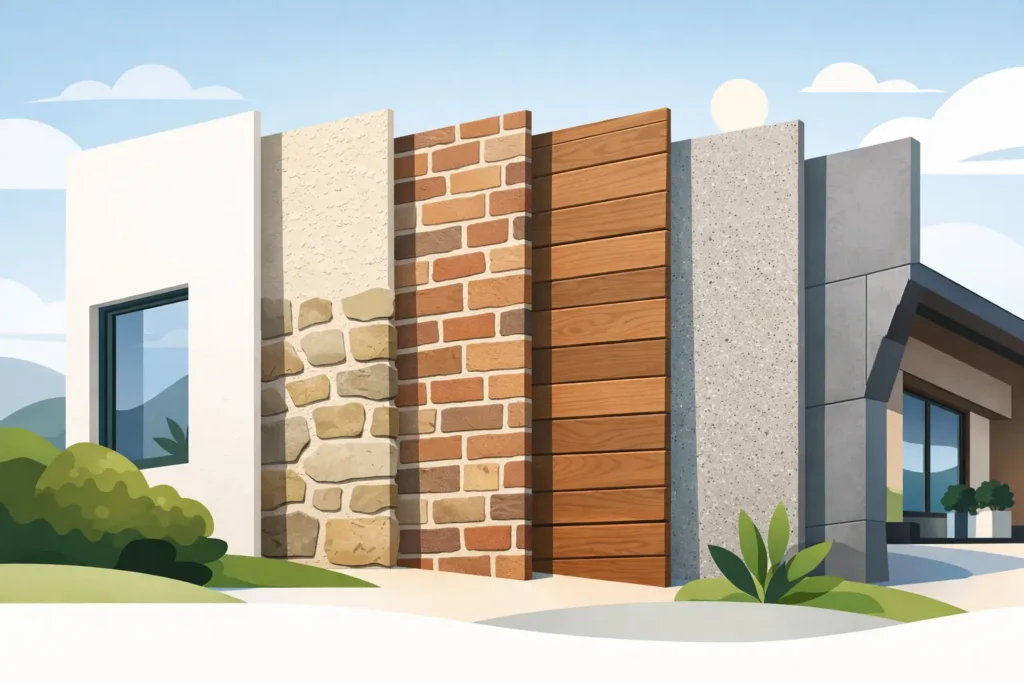
A front wall can look solid from the street and still be underperforming where it counts. We see it often - faded finishes, hairline cracking, patchy repairs, and surfaces that simply were not matched to the building or the weather exposure. Choosing the best exterior wall rendering finishes is not just about appearance. It is about how the surface handles movement, moisture, heat, impact, and day-to-day wear over time.
For homeowners, builders, and property managers, the right finish can lift street appeal and reduce maintenance headaches. The wrong one can leave you chasing repairs, repainting sooner than expected, or dealing with a finish that never quite looks right on the wall. That is why the finish needs to be chosen with the substrate, site conditions, and long-term use in mind.
What makes an exterior render finish the right choice?
There is no single finish that suits every property. A modern townhouse in a new estate, a renovated brick veneer home, and a commercial façade all place different demands on the wall system. The best result comes from balancing appearance with performance.
A good exterior finish should bond properly to the substrate, cope with local weather conditions, and suit the style of the building. It also needs to be practical to maintain. Some finishes are better at hiding minor surface variation. Others deliver a sharper architectural look but need tighter preparation and cleaner lines underneath.
In Melbourne, that balance matters. Exterior walls can be exposed to strong sun, wind-driven rain, temperature swings, and general moisture movement across seasons. A finish that performs well in those conditions is usually the one worth paying for.
Best exterior wall rendering finishes for long-term performance
Acrylic render finish
Acrylic render is one of the most widely used finishes for exterior walls, and for good reason. It is flexible, durable, and suitable for a wide range of substrates when applied correctly. Compared with more rigid systems, acrylic render tends to handle minor building movement better, which can reduce the risk of visible cracking.
It also gives plenty of control over texture. You can go for a finer, more contemporary look or a more traditional textured surface depending on the project. For many residential properties, acrylic render hits the sweet spot between appearance, weather resistance, and practical maintenance.
That said, product quality and application matter. A poor base or rushed prep can still lead to failure. Acrylic is forgiving, but it is not a shortcut.
Cement render finish
Cement render remains a strong option where a solid, traditional rendered appearance is the goal. It has been used across Australian properties for decades and still suits many masonry walls, boundary walls, retaining walls, and older homes.
The main advantage is strength and familiarity. Cement-based systems can produce a durable finish with a clean painted surface when the substrate is sound and the mix is right. It is often chosen where owners want a more classic rendered look without moving into specialised decorative systems.
The trade-off is flexibility. Cement render is generally more rigid than acrylic systems, so substrate movement and crack control need to be managed carefully. On the right wall, it performs well. On the wrong wall, it can become a maintenance issue.
Float finish
A float finish is popular when you want a neat, uniform texture that sits comfortably across both modern and traditional exteriors. It is created by rubbing the render surface to achieve an even, slightly textured appearance.
This finish is practical because it helps disguise minor surface irregularities better than a very smooth finish. It also gives the wall a consistent, workmanship-driven look without being overly decorative. For many homes, a float finish offers a good balance between visual appeal and everyday durability.
It is not as sharp or minimalist as a polished smooth finish, but that is often the point. It looks settled, professional, and less demanding in harsh outdoor conditions.
Smooth render finish
Smooth render is often the first choice for contemporary homes and commercial façades. When done properly, it creates a clean, refined surface that suits modern architecture, painted finishes, and crisp design lines.
The catch is that smooth finishes are less forgiving. Every undulation, patch, or inconsistency underneath has a better chance of showing through. Surface preparation needs to be exact, and the applicator needs a steady hand and a clear process from basecoat to final finish.
For the right project, the result can be excellent. Just be realistic about the wall condition and the level of finish expected. Smooth looks simple, but it is one of the finishes that most clearly shows the difference between average work and proper trade workmanship.
Sponge finish
A sponge finish gives the wall a softer texture than a float finish, with a subtle pattern that can work well on homes where a more relaxed external appearance is preferred. It is often used to break up flat expanses and give the rendered surface some visual movement.
From a practical standpoint, this finish can help reduce the visual impact of small imperfections. It is not as severe as smooth render, and it does not rely on sharp, uniform texture in the same way some decorative systems do.
It may not suit every architectural style, especially if the brief is highly modern or minimal. But for many residential upgrades, it remains a dependable and attractive finish.
Bagged or textured finish
A bagged or heavier textured finish is often used when character matters more than a polished appearance. It can suit older homes, renovation projects, and façades where the goal is to add depth and soften the look of plain masonry.
This style can be particularly useful when the existing wall is less than perfect. Rather than trying to force a highly refined finish onto a substrate with age, variation, or previous repairs, a textured approach can work with the building instead of against it.
The trade-off is style specificity. Not every buyer, owner, or builder wants a more textured result. It needs to fit the property, not just cover the wall.
Coloured render and architectural coating systems
Sometimes the finish is less about texture and more about the final surface system. Coloured renders and specialised architectural coatings can provide a strong visual outcome while improving weather resistance and reducing the need for frequent repainting.
These systems are often used on higher-end homes, commercial façades, and design-led renovations where consistency of colour and finish is a priority. They can also be paired with acrylic or cement base systems depending on the wall build-up.
The key here is compatibility. The coating needs to suit the render beneath it, and the whole system should be designed to perform together. A good-looking topcoat will not fix a poorly prepared substrate.
How to choose between the best exterior wall rendering finishes
Start with the substrate. Brick, block, blueboard, concrete, fibre cement, Hebel, and cladding systems all behave differently. A finish that performs well over masonry may not be the right choice for a lightweight wall system unless the full specification is designed for it.
Then consider movement and exposure. If the wall gets full weather, heat load, or has a history of cracking, flexibility becomes more important. If the wall is older and uneven, a slightly textured finish may deliver a better result than chasing a perfectly smooth face.
Appearance matters too, but it should be the final filter, not the first. A finish should suit the architecture of the building and the level of maintenance the owner is comfortable with. Sharp contemporary finishes look excellent when they are executed properly and maintained well. More forgiving textures can stay looking tidy with less fuss.
Budget also plays a part, but the cheapest finish is rarely the best value. Repairs, repainting, and premature deterioration cost more than doing the surface properly from the start.
Workmanship matters as much as the finish itself
Even the best exterior wall rendering finishes can fail if the preparation is poor. Clean substrate assessment, correct basecoat selection, reinforcement where needed, proper curing, and attention to detail around joints and edges all affect the final result.
This is where experience shows. An experienced renderer does not just apply a finish. They assess the condition of the wall, identify likely movement or moisture issues, and match the system to the building. That approach is what gives the finish a proper chance of lasting.
If you are comparing options for a home or commercial property, ask not only what finish is being proposed, but why. A good answer should be based on the wall, the exposure, and the outcome you want - not just what is quickest to apply.
The best finish is the one that still looks right and performs properly years after the scaffold is gone.