
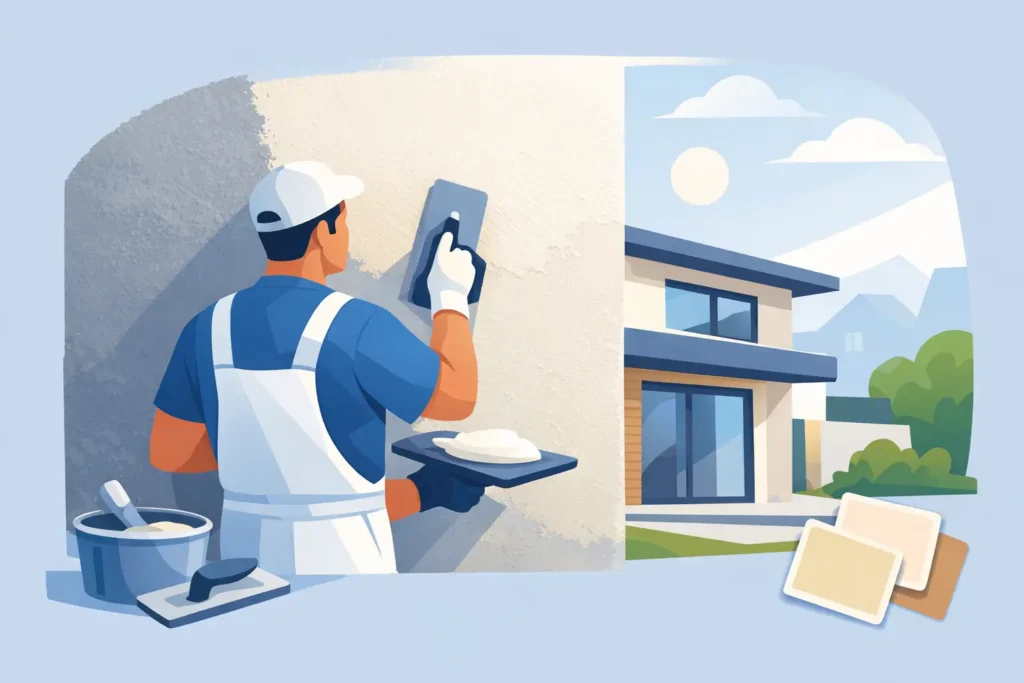
A wall finish can look sound from the street and still be letting you down. Hairline cracking, patchy texture, moisture stress and fading often show up slowly, then all at once. That is why acrylic rendering services are a practical choice for property owners who want more than a cosmetic upgrade. Done properly, acrylic render improves appearance, helps protect the substrate beneath, and gives you a finish that stands up better to movement and weather.
For homeowners, builders and commercial property managers, the real question is not whether acrylic render looks good. It does. The better question is where it performs best, what it should be applied over, and whether it suits the condition of your walls. Those details matter far more than a brochure promise.
What acrylic rendering services actually involve
Acrylic render is a pre-mixed coating system that includes acrylic resins to improve adhesion, flexibility and water resistance. Compared with traditional cement-only render, it is generally less brittle and better suited to surfaces that experience slight movement. That flexibility is one of the main reasons it is widely used on modern homes, renovated facades and lightweight cladding systems.
In practical terms, acrylic rendering services usually cover surface preparation, repair of minor defects, base coating where required, application of the render system, and the chosen texture or finish coat. The process is not one-size-fits-all. A masonry wall, painted surface, blueboard, foam cladding system or repaired facade all need a different approach.
That is where experience shows. Good rendering is not just about spreading product on a wall. It depends on assessing the substrate, checking for loose material, managing moisture issues, and applying the right system at the right thickness. If those steps are skipped, even quality products can fail early.
Why acrylic render appeals to Australian property owners
Australian conditions are hard on exterior surfaces. Heat, wind-driven rain, UV exposure and general building movement all test a finish over time. Acrylic render is popular because it balances appearance with performance in a way many owners are looking for.
One of its strongest advantages is flexibility. Buildings expand and contract. Different materials move at different rates. A more flexible render system is better placed to cope with that movement than a rigid finish that is more prone to cracking.
It also offers strong visual range. Acrylic render can be finished smooth, textured, fine or more pronounced depending on the look you want. That makes it useful across older homes needing a facelift, new builds aiming for a cleaner architectural finish, and commercial sites where presentation matters.
There is also the practical benefit of adhesion. Acrylic systems tend to bond well to a variety of surfaces when correctly prepared. That opens up more options than older render methods, particularly on renovation projects where existing wall types are mixed.
Where acrylic rendering services work best
Not every wall needs acrylic render, but there are situations where it makes strong sense. It is commonly used on exterior facades, internal feature walls, fences, retaining walls, blueboard and suitable cladding systems. It is also a sound option where a client wants a cleaner, more modern finish without a full rebuild.
For renovation work, acrylic render can help bring dated brickwork or tired wall surfaces into line with the rest of the property. That matters if you are trying to improve street appeal, prepare a property for sale, or lift the standard of an investment home without major structural changes.
For commercial premises, presentation and durability often carry equal weight. A neat rendered finish helps create a more professional look, but the coating system also needs to cope with exposure, traffic and maintenance demands. In those settings, the right acrylic system can provide a practical balance.
The trade-offs to understand before you choose it
Acrylic render is a strong option, but it is not automatically the right one for every project. If a wall has significant structural cracking, trapped moisture, unstable paint, blown render or substrate failure, those issues need to be addressed first. Render should not be used to hide active problems.
Cost is another factor. Acrylic systems can be more expensive than basic cement rendering. That higher upfront cost often reflects better flexibility, improved adhesion and a broader finish range, but budget still matters. If the project is purely functional and the substrate is suitable, another render system may be enough.
Finish selection also needs thought. A very smooth finish can look sharp, but it may show imperfections more readily than a textured one. On large elevations or older walls, a texture finish can sometimes provide a more forgiving and durable result. It depends on the building, the existing surface and the standard of finish expected.
How quality acrylic rendering services are delivered
The difference between a finish that lasts and one that starts failing early usually comes back to preparation and application discipline. A proper rendering contractor will inspect the surface condition before recommending a system. That includes checking for cracks, drummy areas, contamination, previous coatings and signs of moisture ingress.
Preparation may involve cleaning, patch repairs, crack treatment, priming, meshing or installing beads for clean lines and edge control. Only then should the render system go on. This staged approach is not overkill. It is what gives the finish a proper foundation.
Application technique matters as well. Consistent thickness, correct curing conditions, weather awareness and an even finish all affect the final result. Rendering on a hot day, in direct sun, or onto poorly prepared backgrounds can create problems that no top coat will fix later.
Cleanliness on site is another sign of professionalism. Rendering can be messy work, but it should still be controlled work. Protecting adjacent surfaces, keeping work areas tidy and leaving the property in good order says a lot about the standard of contractor you are dealing with.
Acrylic rendering services and crack resistance
Clients often ask whether acrylic render stops cracks altogether. The honest answer is no render system can guarantee a crack-free building forever. Buildings move. Materials age. External conditions change. What acrylic render can do is reduce the likelihood of visible cracking compared with more rigid systems, especially where minor movement is expected.
That said, existing cracks need proper treatment. A crack caused by structural movement, footing issues or ongoing water damage is not solved by covering it. It needs diagnosis and repair before rendering begins. For minor surface cracking, reinforcement methods and the right flexible coating system can improve the outcome significantly.
Choosing the right finish for your property
The best finish is not always the most decorative one. It is the one that suits the building, the exposure level and the maintenance expectations. A family home may benefit from a texture that hides marks and stands up well over time. A contemporary facade may call for a finer finish with sharper lines. A commercial wall may need a practical balance between appearance and serviceability.
Colour selection also plays a part. Lighter colours can reduce heat absorption, while darker tones may suit the design brief but place more stress on the coating system in strong sun. That is not a reason to avoid darker finishes altogether, but it is something worth discussing before the job starts.
If your property is in Melbourne, local conditions should be part of the conversation. Temperature changes, rain exposure and wall orientation all influence how a render system will perform over time. A good recommendation should reflect the site, not just the product brochure.
What to look for in an acrylic rendering contractor
The safest choice is a contractor who talks as much about preparation and suitability as they do about appearance. Anyone can promise a fresh finish. The better operators will explain what is happening underneath, what system they recommend, and why.
Look for experience across both new and existing surfaces, clear knowledge of substrate behaviour, and a commitment to using quality materials that meet Australian expectations for durability and performance. It also helps to work with a team that understands related issues such as crack repair, cladding interfaces and facade restoration, because rendering rarely exists in isolation.
Australian Rendering Company approaches acrylic render the way it should be approached - as a finish system that needs proper assessment, careful preparation and workmanship that holds up once the scaffold comes down. That matters more than sales language ever will.
Acrylic render is not just about making a wall look better for the next inspection or listing photo. It is about giving the surface a finish that suits the building, the conditions and the way the property will be used. When the right system is matched to the right substrate and applied without shortcuts, the result is easier to live with, easier to maintain and far more likely to last.