
Cracks in a rendered wall are common, and not every crack means the whole surface needs to be redone. Understanding when to repair cracks in rendered walls can save you money and stop a small problem from turning into a bigger one. Render protects brick, block, and other materials from the weather, so keeping it in good condition matters more than most homeowners realise.
Left unchecked, even a minor crack can affect how the whole property looks from the street. Getting the right diagnosis early also keeps costs down and avoids unnecessary work on parts of the wall that are still sound.
Here's how to tell a simple repair job from a bigger one, before you call in a professional.
Why Render Cracks in the First Place
Render moves slightly as a building settles, as temperatures change through the seasons, and as materials expand and contract with the weather. A little movement is normal, and problems really only start when cracking spreads or lets moisture behind the wall.
Common reasons for render cracks include:
- Natural settling in the first year or two after a new build
- Seasonal expansion and contraction of the wall surface
- Age and general wear on older rendered homes
- Render that was mixed or applied the first time unevenly
- Movement in the structure underneath the render
Older and newer homes can both develop cracks, though the causes often differ.
Signs a Simple Repair Is Enough
Most cracks fall into this category. If you're ticking most of the boxes below, a patch is usually all that's needed:
- The crack is thin, hairline, or barely wider than a pencil line
- It's isolated to one small area, such as near a window corner
- The render around it still sounds solid when tapped
- It hasn't grown or spread since you first noticed it
A proper repair involves cleaning out the crack, filling it with a matching render mix, and blending the patch so it isn't obvious once painted over. This is the most common scenario homeowners deal with, and it usually calls for a targeted patch rather than a full replacement of the wall.
Is It Normal for New Render to Crack?
Yes, in most cases. Render cracking after installation happens as the new render cures and settles into place over the following months. This type of cracking tends to be shallow, stays small, and rarely signals a fault in the work.
Quick guide:
| Timing | What it usually means |
| Cracks within the first year, staying small | Normal curing, patch if needed |
| Same spot cracking again after a repair | Worth having checked properly |
| Cracking that keeps spreading over time | Likely needs a closer look |
If your render falls into that first row, there's usually nothing to worry about beyond a simple patch. It's only when the same crack keeps returning, or new ones start appearing nearby, that it's worth asking a professional to take a closer look at what's happening underneath the surface.
When Large Cracks Signal a Bigger Problem
Large cracks in exterior render are a different story to the hairline kind. Watch for cracks that:
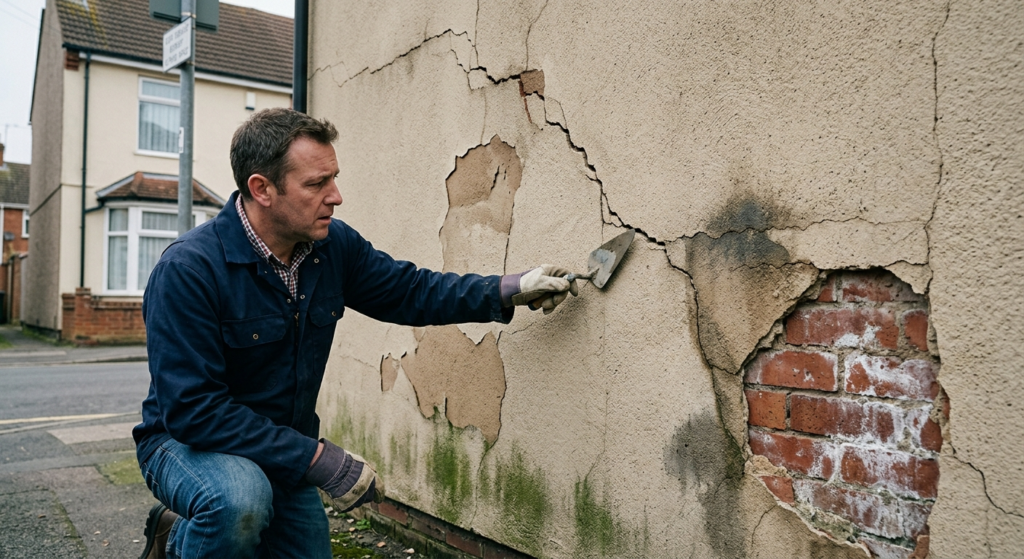
- Run diagonally across the wall
- Follow a long, straight line rather than a short hairline
- Keep widening rather than staying the same size
- Sit in a spot where the render already sounds hollow or loose
These patterns can point to movement in the structure itself, a section of render that has separated from the wall, or an original application that never bonded properly. Patching a crack like this on its own usually doesn't fix the underlying issue, and it tends to come back.
The Risk of Ignoring a Cracked Wall
Leaving cracks unattended rarely makes them disappear. What happens if cracked render is not repaired usually follows a familiar pattern: water finds its way into the crack during rain, moisture then sits behind the render instead of draining away, and the bond between the render and the wall gradually weakens.
Over time, small cracks turn into flaking, bubbling, or sections that come away completely, and the repair needed becomes bigger than it would have been if it had been picked up sooner.
Repair or Replace? How to Know Which One You Need
If your cracks match the signs covered above, a straightforward repair is generally the way to go. Replacement becomes the better option once the damage goes beyond a single patch, such as:
- Cracking that has spread across a large section of the wall
- Render that sounds hollow in several different spots
- Past patch repairs that have already failed in the same place
When does render need to be replaced instead of patched depends on these patterns rather than the crack alone. Replacing the affected section usually gives a longer lasting result than another round of patching.
Getting the Repair Right
How to fix cracks in rendered walls properly starts with working out why the crack appeared, not just filling in the gap. A tradesperson checks whether the cause is cosmetic or structural, removes any loose or damaged render, and cleans and lightly keys the surrounding surface so the new mix has something to bond to.
A fresh render mix is then applied and given time to cure before the area is painted. Skipping any of these steps is usually why a repair needs doing again within a year.
Making the Right Call for Your Wall
Cracks aren't always a sign that your render has failed. In many cases, a repair carried out properly is all that's needed to protect the wall and keep it looking the way it should. Knowing when to repair cracks in rendered walls, rather than assuming the worst, comes down to getting an honest look at what's actually happening underneath the surface.
If you're unsure which category your cracks fall into, Australian Rendering Company can take a look at the wall and recommend the right fix for your property.
Frequently Asked Questions
Do all render cracks need professional repair?
Not always. Small, shallow cracks are usually just cosmetic, but ones that keep growing, sit at an angle, or come back after a patch are worth having looked at.
How long does a render crack repair take?
Small repairs can often be finished in a day, while larger cracks or wider damaged sections may take longer depending on drying time.
Can I paint over a cracked render wall?
Painting over cracks without repairing them first usually hides the problem temporarily, and the crack is likely to reappear through the new paint.
What causes render to crack after a few years?
Weather exposure, building movement, moisture behind the render, or an original application not suited to the surface can all cause cracking.
Is a small crack today a sign of bigger damage later?
Not necessarily, but small cracks left unrepaired can let moisture in over time, which may lead to larger and more costly damage.