
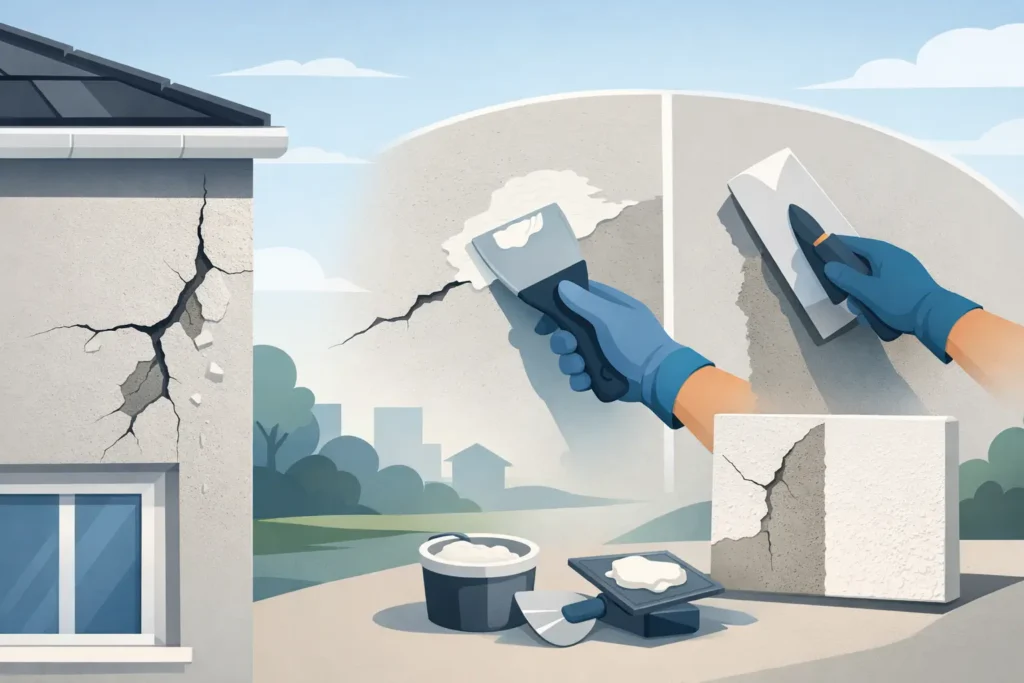
A hairline crack across a rendered wall can look minor on Monday and noticeably wider after a wet Melbourne winter. The question is, can cracked render be patched without redoing the whole wall? Often, yes. But a lasting repair depends on why the render cracked in the first place, not simply on filling the visible line.
Render is a protective finish as well as an architectural surface. When it is repaired with the right preparation, compatible materials and proper curing, a patch can restore both appearance and weather resistance. When the underlying movement, moisture issue or poor bond is ignored, the crack commonly returns - sometimes beside the new repair.
When cracked render can be patched successfully
Localised damage is usually suitable for patching when the surrounding render is firmly bonded, dry and generally in sound condition. This includes small impact damage, isolated shrinkage cracks and minor cracking around areas that have experienced slight movement but have now stabilised.
A professional repair starts by testing the wall around the crack. Sound render feels solid when tapped and remains well attached to the substrate. Hollow-sounding, drummy or loose sections need to be removed back to a firm edge. Patching over weakened render may look acceptable initially, but it does not provide a dependable base.
Hairline cracks can often be opened slightly, cleaned and filled with a suitable flexible repair compound before the wall is refinished. Wider cracks normally require more preparation. The repair may need a reinforcing mesh embedded within a compatible base coat, followed by a finish coat that matches the existing texture.
The aim is not merely to hide the crack. It is to recreate a stable rendered surface that can manage normal thermal expansion, contraction and weather exposure.
When a patch is not enough
Some cracks are a warning that the issue extends beyond the render itself. A patch alone is unlikely to be the right long-term answer if the crack continues through brickwork, masonry joints, concrete or internal plasterboard. The same applies where a crack is widening, recurring after previous repairs or accompanied by signs of water entry.
Cracks around doors, windows and building corners deserve particular attention. These areas concentrate stress, especially where different building materials meet. Brickwork, concrete, timber framing, cladding and rendered surfaces can all move at different rates. Without the correct joints, reinforcement or substrate preparation, a neat repair can be placed under pressure from day one.
Moisture is another common cause of failed render repairs. Water may enter through failed flashing, roof leaks, overflowing gutters, unsealed penetrations, rising damp or cracks at parapets and window openings. If the wall remains damp, the render can lose adhesion, stain, bubble or deteriorate. The water source must be rectified before the surface is repaired.
There are several signs that call for a closer inspection rather than a quick patch:
- cracking that is wider at one end or changes over time
- loose, hollow or flaking render around the damaged area
- rust staining, efflorescence or persistent damp marks
- cracks that run through masonry, concrete or multiple levels of the building
- repeated cracking at the same location after earlier repairs
Where building movement is suspected, the cause should be assessed by an appropriately qualified professional before cosmetic work proceeds. Good rendering work protects the façade, but it cannot correct an unresolved structural issue.
Why cracked render fails in Melbourne properties
Melbourne homes and commercial buildings deal with sharp temperature changes, wind-driven rain and long periods of moisture exposure. Exterior render expands and contracts with changing conditions. A well-specified system allows for this movement, while a brittle or poorly bonded finish is more likely to crack.
Age can also play a part. Older cement render may become less flexible over time, particularly if it has been repeatedly painted with incompatible coatings or exposed to water. On renovated properties, old walls can be joined to new additions, creating different substrates and movement patterns across one façade.
Poor original preparation is another factor. Render needs a clean, stable substrate and the right bonding method. Smooth concrete, painted masonry, lightweight cladding and Hebel panels all require different preparation and compatible render systems. Applying a new coat over contaminated, damp or unstable surfaces creates problems that may not show until months later.
How a durable render patch is completed
Proper crack repair is careful trade work, not a tube of filler and a coat of paint. The exact method depends on the substrate, render type, crack width and finish required, but the process follows a clear sequence.
First, damaged and unsound render is removed. This creates a solid perimeter for the repair and exposes any hidden deterioration. The crack and surrounding substrate are then cleaned of dust, salts, loose material and contamination.
Next comes substrate preparation. Depending on the wall, this may involve a bonding agent, repair mortar, flexible compound or reinforcement mesh. Mesh is particularly valuable where cracks follow joints or where different materials meet, as it helps distribute minor movement across a wider area rather than concentrating it along one line.
The repair is then built up in suitable layers. Cement-based and acrylic rendering products are not interchangeable in every situation. A cement render patch on an acrylic render façade, for example, may differ in flexibility, texture and moisture behaviour. The system needs to work together, from the base coat through to the final finish and protective coating.
Finally, the repaired section is floated, trowelled or textured to blend with the existing wall. This is where experienced workmanship makes a visible difference. Fine sand finish, sponge finish, polished concrete-style render and heavier textured coatings all require a different approach. Colour matching can also be challenging, especially on older painted façades affected by sun and weathering. In some cases, repainting the full elevation is the most consistent way to achieve an even result.
Can cracked render be patched without repainting?
It depends on the size of the repair, the colour variation and the wall finish. A small patch in a textured or unpainted render may blend well when completed by a skilled renderer. On smooth painted walls, even a technically excellent repair can remain visible because paint fades unevenly over time.
If appearance is a priority, it is sensible to plan for repainting the affected wall after repairs have cured. This protects the repaired area and gives the façade a uniform finish. The coating selected should be compatible with the render system and suitable for external exposure.
Do not paint over a crack simply to make it disappear. Paint may bridge very fine surface marks temporarily, but it does not fix a loose render base, active movement or moisture problem. It can also make later diagnosis more difficult.
Choosing between patching and re-rendering
Patching is generally the practical choice where damage is isolated and the remaining render is sound. It limits disruption, reduces material use and preserves areas that do not need replacement. For a small section of a fence, retaining wall or house façade, it can be an effective repair with a long service life.
Re-rendering a larger area may be better value where cracking is widespread, the finish is hollow in several locations, repairs would be highly visible or the existing render is near the end of its useful life. It also creates an opportunity to improve the façade with a more suitable acrylic render, cement render or cladding system for the building.
The decision should be based on condition, not just the visible crack count. A wall with three isolated, stable cracks may only need targeted work. A wall with one crack and widespread drummy render may require a far more substantial repair.
Protecting the repair after the work is done
Once repairs are complete, keep water away from the wall wherever possible. Maintain gutters and downpipes, check roof and window flashings, and ensure garden beds or paving are not directing moisture against the rendered surface. Avoid attaching fixtures through the wall without properly sealing penetrations.
A quality render repair should be allowed to cure as specified before painting or exposing it to unnecessary impact. Periodic visual checks are worthwhile, particularly after heavy rain or a very hot summer. Early action on a new hairline crack is usually simpler and less costly than waiting until moisture has reached the substrate.
For property owners, the useful question is not only whether a crack can be filled. It is whether the wall has been properly assessed, prepared and repaired for the conditions it faces. That is what gives a rendered finish the best chance of looking clean and performing well for years to come.