
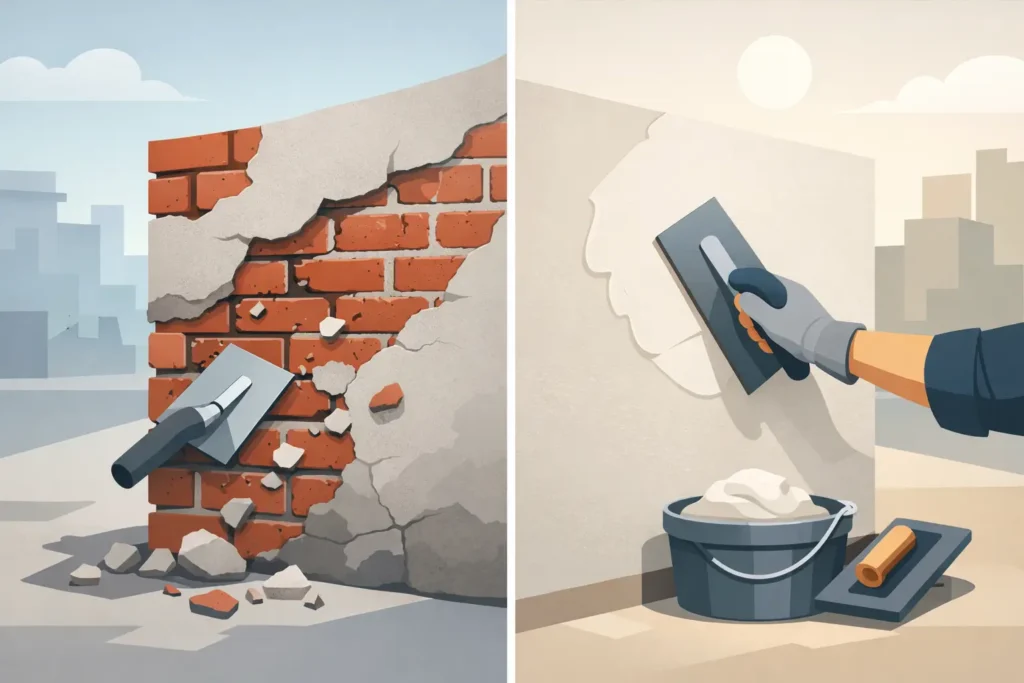
A brick wall can look tired for years, then one wet winter makes the problem impossible to ignore. Crumbling faces, open mortar joints, staining and cracks can quickly affect both street appeal and confidence in the wall behind it. So, can render cover damaged bricks? In many cases, yes - but rendering is only a reliable solution when the brickwork is assessed and repaired before the first coat goes on.
A quality render finish can transform an ageing façade, protect sound masonry and give a property a clean, modern appearance. It cannot, however, stabilise loose bricks, stop an active moisture issue or correct movement that is still occurring. The difference between a finish that lasts and one that cracks or debonds comes down to preparation, compatible materials and proper trade workmanship.
When render can cover damaged bricks
Rendering is well suited to brickwork with superficial damage. This includes weathered brick faces, minor chips, old paint remnants, uneven colour, patched areas and mortar joints that have become visually untidy. Once the wall is made sound, render creates a consistent surface that can improve the appearance of older homes, investment properties, boundary walls and commercial façades.
It is also a practical option where individual brick replacement would be disproportionate to the cosmetic damage. Rather than chasing a close match for discontinued bricks, a properly prepared render system provides a complete new finish across the wall.
The key condition is that the substrate must be stable. Bricks need to be firmly bonded, mortar joints must be serviceable, and the wall must be free from unresolved water entry. Render adheres to the face of the masonry. If that masonry is failing, the finish above it will eventually fail too.
Surface damage versus wall failure
Not every damaged brick wall needs major rebuilding. Small surface losses and localised wear are often repairable as part of the rendering preparation. A contractor can remove loose material, repair defective joints, patch minor voids and prepare the face for the selected render system.
More serious signs need closer investigation. Deep or widening cracks, bulging sections, bricks that move when pressed, crumbling mortar across large areas, or persistent damp patches may indicate structural movement or moisture penetration. These issues should be addressed first, and may require a builder, engineer or remedial bricklayer depending on the cause.
Covering these symptoms with render may make them disappear for a short time, but it does not remove the cause. In the worst case, trapped moisture or continued movement can lead to hollow patches, cracking and sections of render breaking away.
The checks a professional should make first
A proper site assessment is not an optional extra. It determines whether rendering is appropriate and what preparation the wall needs. On older Melbourne brickwork, the most common concerns are moisture, movement, poor past repairs and incompatible coatings.
Moisture deserves particular attention. Water can enter through failed flashings, overflowing gutters, cracked cappings, leaking pipes, unsealed penetrations or deteriorated mortar. Rising damp may also affect lower wall sections. If salts are visible as a white powder, or the wall remains damp after dry weather, the source of moisture needs to be identified before rendering.
Existing paint and old coatings also matter. Sound, well-adhered coatings may be prepared to receive an appropriate system. Peeling paint, chalky surfaces, contaminated brickwork and loose cement-based patches need removal or treatment. A clean, stable and suitably textured background gives the render the best chance of bonding correctly.
Cracks should be assessed rather than simply filled. Fine, dormant surface cracks may be repaired as part of preparation. Cracks caused by ongoing movement need a system designed to manage that movement, and sometimes further structural work. There is no single repair method that suits every crack.
How damaged brickwork is prepared for rendering
Good rendering starts well before the finishing coat. Loose bricks, failed mortar and friable sections are removed or repaired. The wall is cleaned of dust, salts, mould, loose paint and contaminants that could interfere with adhesion. Any repairs are allowed to cure properly before the render system is applied.
Where required, the surface may receive a bonding agent or a base coat suited to the substrate. Mesh reinforcement can be installed over repaired areas, changes in material and selected crack-prone locations. This helps distribute stresses through the base coat, although it is not a substitute for fixing major structural movement.
Corners, openings and edges require careful detailing. These areas are more exposed to impact and movement, and poor workmanship is often obvious around windows, doors and wall returns. Straight lines, consistent thickness and clean junctions are signs that the work has been carried out with care.
The render is then built up in compatible layers. Depending on the condition of the wall and the finish required, this may include a levelling coat, reinforced base coat and acrylic or cement-based finishing coat. Each stage needs suitable drying time. Rushing the process can compromise adhesion and increase the risk of shrinkage cracking.
Choosing between cement and acrylic render
Both cement render and acrylic render can be effective over prepared brickwork, but they perform differently. The best choice depends on the wall condition, exposure, required finish and the wider building design.
Cement render is a traditional option that provides a solid, durable finish. It is often suitable for sound masonry where a classic rendered appearance is required. Because cement-based products are less flexible, substrate preparation and curing are particularly important. On walls with a history of minor movement, the system needs to be selected carefully.
Acrylic render is generally more flexible and can offer improved resistance to hairline cracking caused by minor movement. It is available in a range of textures and can be finished to suit contemporary or traditional façades. It is not a cure for serious wall movement, but its flexibility can make it a sensible choice for many residential exteriors.
Breathability must also be considered, especially on older brickwork. A wall that has previously managed moisture through the masonry should not be sealed with an unsuitable coating system. The goal is to protect the wall while allowing the whole assembly to perform as intended.
Common shortcuts that cause render failure
The most expensive rendering jobs are often the ones that appeared cheapest at the start. Problems usually come back to skipped preparation or a product chosen without regard for the wall beneath it.
Rendering directly over damp bricks can trap moisture and lead to staining, bubbling or loss of adhesion. Applying render over loose paint or powdery brick faces creates a weak bond. Filling a structural crack without addressing movement means the crack is likely to reflect through the new finish.
Another common issue is applying a very thin coat simply to hide brick texture. Thin coatings can be appropriate in the right system, but a heavily damaged or uneven wall may need proper levelling and repair first. Attempting to straighten a poor wall with inconsistent thickness can affect appearance, drying and long-term durability.
A professional contractor will also protect adjoining areas, manage wash-down and leave the site clean. Rendering is a visible finish trade. Careful masking, neat edges and orderly preparation are part of the result, not separate from it.
When rendering is not the right answer
There are situations where damaged bricks should not be rendered immediately. If the wall is structurally unstable, has significant movement, suffers from unresolved rising damp, or is part of a heritage façade where original brickwork must be retained, another repair approach may be needed.
Likewise, a retaining wall requires separate consideration. It must manage soil pressure and drainage correctly before any decorative finish is applied. Render can improve its appearance, but it must never be relied on as waterproofing or structural reinforcement.
For some properties, replacing isolated damaged bricks and repointing mortar may be the better long-term repair. For others, cladding or a complete façade upgrade may better suit the desired appearance and insulation goals. The right answer depends on the wall, not on a one-size-fits-all product.
A finish is only as good as the wall beneath it
Render can cover damaged bricks successfully when the damage is cosmetic or has been properly repaired. It can provide a durable, attractive finish that refreshes an older property and helps protect sound masonry from the elements. But a rendered wall should never be used to hide uncertainty about damp, cracks or instability.
Before committing to a finish, have the brickwork inspected by an experienced rendering specialist who understands substrate preparation as well as the final coat. A clear diagnosis at the start gives you a better-looking wall, a longer-lasting result and fewer repair costs down the track.