
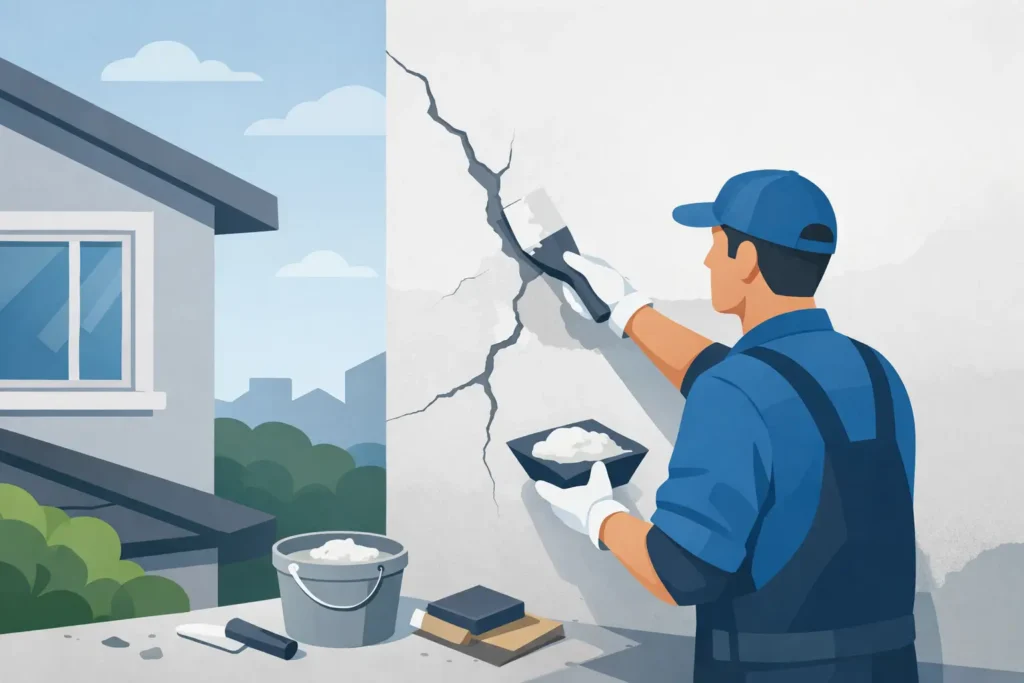
A crack in render rarely stays as just a cosmetic issue. What starts as a fine line can quickly turn into water entry, blown sections, staining, and a finish that dates the whole property. If you are looking up how to repair rendered wall cracks, the first thing to understand is this - the right repair depends on why the crack appeared in the first place.
Render is designed to protect and improve the surface beneath it, but it still moves with the building, the substrate, and the weather. In Australian conditions, especially across exposed exterior walls, heat, moisture, settlement, and poor previous workmanship can all show up through the render. A proper repair is not about smearing filler over the line and hoping for the best. It is about restoring adhesion, flexibility where needed, and a finish that will last.
Before you repair rendered wall cracks, find the cause
Not every crack means the same thing. Hairline shrinkage cracks are usually different from structural movement cracks, and they need different repair methods. If you skip this step, the crack often comes back through the new finish.
Small, shallow cracks can develop as render cures, especially if the mix was too strong, dried too quickly, or was applied in poor conditions. These are often localised and fairly stable. Wider cracks, stepped cracking near brick joints, or cracks that keep reopening can point to movement in the wall, failed control joints, moisture problems, or delaminated render.
It is also worth checking whether the crack is active or dormant. A dormant crack has already done its moving and may hold after repair. An active crack continues to shift with seasonal movement, footing issues, or structural stress. If doors and windows are sticking, the crack runs through brickwork as well as render, or the wall is bulging, it is time to get the substrate assessed before any cosmetic repair begins.
How to assess the crack properly
Start with the width, depth, and pattern. A very fine surface crack in an otherwise sound wall usually suggests a surface-level repair. A crack wider than a couple of millimetres, or one with hollow-sounding render nearby, deserves a closer look.
Tap around the damaged area with a light tool or the handle of a trowel. If the render sounds drummy or hollow, it may have lost bond with the substrate. In that case, repairing only the visible crack is not enough because the surrounding section may fail next. You also need to check for moisture staining, salt deposits, or soft areas, particularly around downpipes, window heads, parapets, and retaining walls.
For painted render, expect a little extra work. The repair material needs to bond not just to the old render but to whatever coating is already on the wall. Loose paint, chalky surfaces, and old patch repairs can all weaken the result.
How to repair rendered wall cracks step by step
For minor, non-structural cracks in sound render, the repair process is straightforward, but it still needs care.
1. Open the crack and remove loose material
A fine crack should be chased out slightly so the repair material can key in. If you only skim over the top, the patch is too thin and tends to fail. Remove any weak edges, dust, flaking paint, or loose render. The area needs to be clean and solid before anything goes back on.
2. Clean and prepare the surface
Brush out the crack thoroughly and remove dust. Depending on the substrate and repair product, the area may need to be lightly dampened or primed. This step matters more than many people realise. Dry, dusty, or contaminated surfaces are one of the main reasons patch repairs let go.
3. Use the right repair compound
This is where trade judgement makes a real difference. Hairline cracks may suit a flexible acrylic crack filler or polymer-modified repair compound. Slightly larger cracks often need a repair mortar with better body and adhesion. On acrylic render systems, using a compatible acrylic-based product is usually the safer option. On cement render, the repair still needs to match the wall in strength and flexibility rather than simply being as hard as possible.
Harder is not always better. A repair that is too rigid can push the movement elsewhere and create fresh cracking beside the patch.
4. Reinforce where needed
If the crack is more than superficial, or if the area has a history of movement, embedding fibreglass mesh into the repair zone can improve performance. This helps distribute minor movement across the surface rather than allowing it to reopen as a single line. It is especially useful around stress points such as window corners and junctions between different materials.
5. Rebuild the texture and finish
A good crack repair is not just structurally sound. It also needs to blend with the surrounding render. Smooth finishes, sponge finishes, acrylic textures, and painted render all need a slightly different approach. The patched area should be levelled properly and allowed to cure in line with the product requirements before recoating.
6. Repaint or recoat if required
Most exterior crack repairs will need recoating to achieve a consistent appearance and protect the wall from moisture. Spot painting can work on some textured surfaces, but on broad visible walls it often leaves flashing or colour variation. Sometimes the practical answer is to repaint the whole elevation.
When a simple patch repair is not enough
There are times when chasing and filling the crack is the wrong fix. If render has debonded from the substrate, if there are multiple cracks across a wall, or if previous repairs keep failing, the better option may be to remove and re-render the affected section.
This is common on older homes and poorly prepared surfaces. Once moisture gets behind the render, the bond can break down well beyond the visible crack. In those situations, local patching may save money in the short term but create a patchwork result that does not last.
Movement-related cracking can also need a broader solution. That might include installing or reinstating control joints, correcting moisture entry points, or addressing substrate movement before render repairs are done. The render layer cannot compensate for every issue underneath it.
Common mistakes that make cracks come back
The most common mistake is treating every crack as cosmetic. If the wall is moving, the repair has to allow for that or deal with the cause. Another frequent problem is poor preparation - patching over paint, dust, salt, or loose edges nearly always shortens the life of the repair.
Material mismatch is another issue. Repairs fail when the product is too brittle, too soft, or incompatible with the existing system. Rushing the curing process, applying products in hot sun, or painting too early can also undermine the job. In Melbourne, where conditions can shift quickly, timing and site protection matter more than many owners expect.
DIY or professional repair?
For one or two small, stable hairline cracks, a careful DIY repair can be reasonable if you understand the render type and use suitable materials. The challenge is usually not filling the crack. It is diagnosing whether that crack is actually minor and matching the repair so it does not stand out.
Professional repair is the better choice when cracks are recurring, wider, moisture-related, or spread across multiple areas. The same applies if the wall has hollow sections, visible movement, or an architectural finish that needs to be matched properly. On commercial buildings and prominent residential facades, a poor patch is often just as noticeable as the crack itself.
An experienced renderer will look at the substrate, the age of the finish, exposure conditions, and the most durable repair method rather than reaching for a one-size-fits-all filler. That is usually what separates a short-term touch-up from a proper repair.
Choosing a repair that suits Australian conditions
Rendered surfaces in Australia deal with strong UV, heat cycling, driving rain, and moisture variation. Any repair needs to perform under those conditions, not just look neat on the day it is done. That is why product selection, surface preparation, and finish compatibility all matter.
A wall that faces harsh western sun may need more flexibility than a sheltered internal feature wall. A retaining wall or fence may need extra attention to moisture and movement. Coastal and high-exposure areas can also place more demand on coatings and substrate protection. The best repair method is always site-specific.
If you want the repair to last, slow down and assess the wall properly before any material goes on. A clean, compatible, well-prepared repair over a sound substrate will nearly always outperform a quick patch done for appearance only. When rendered walls are repaired properly, they do more than hide a crack - they restore protection, improve presentation, and give the surface a fair chance of staying sound through the next run of seasons.